Open Knight: Modernizing Chess Analysis Software
Open Knight emerged from a clear gap in the chess software landscape. While existing applications offer powerful analysis capabilities, they often come with significant limitations: Windows-only compatibility, unintuitive interfaces, and closed ecosystems that prevent customization. Open Knight addresses these constraints through a cross-platform, open-source approach that prioritizes both functionality and user experience.
Design Philosophy
The development of Open Knight balances powerful chess analysis capabilities with intuitive interaction patterns. The interface strips away unnecessary complexity while maintaining the depth serious players expect. This approach extends beyond surface-level design to influence the entire application architecture.
Technical Foundation
A hybrid architecture forms the core of Open Knight:
- Rust backend provides reliable performance for intensive operations
- React frontend delivers a responsive, contemporary interface
- Cross-platform compatibility through Tauri framework
- SQLite integration enables efficient, portable data management
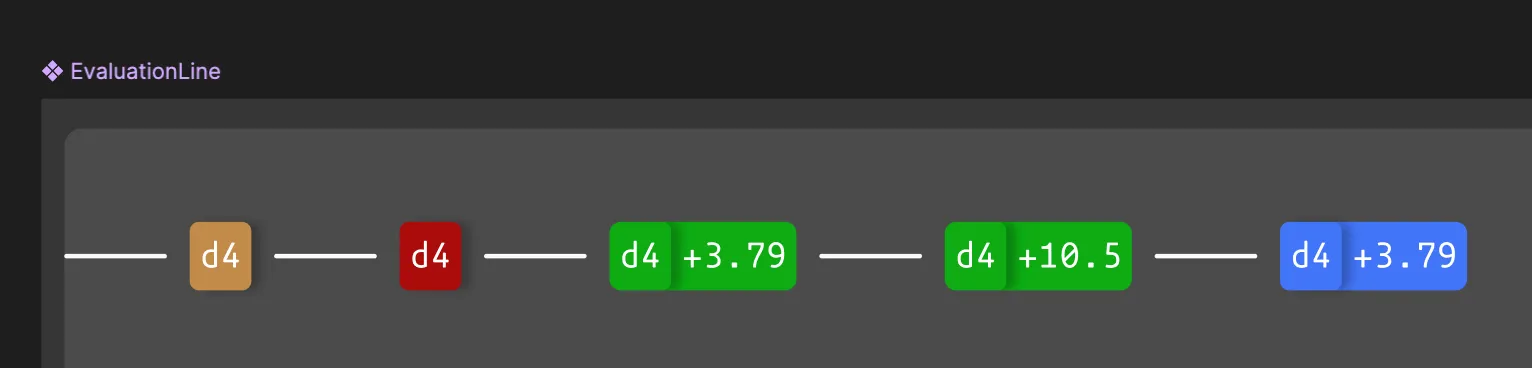
The original evaluation line design I created in Figma
Core Features
The application focuses on essential chess analysis capabilities:
- Database creation and management for game collections
- Interactive game analysis with position evaluation
- Support for multiple UCI-compatible chess engines
- Game replay and move tree visualization
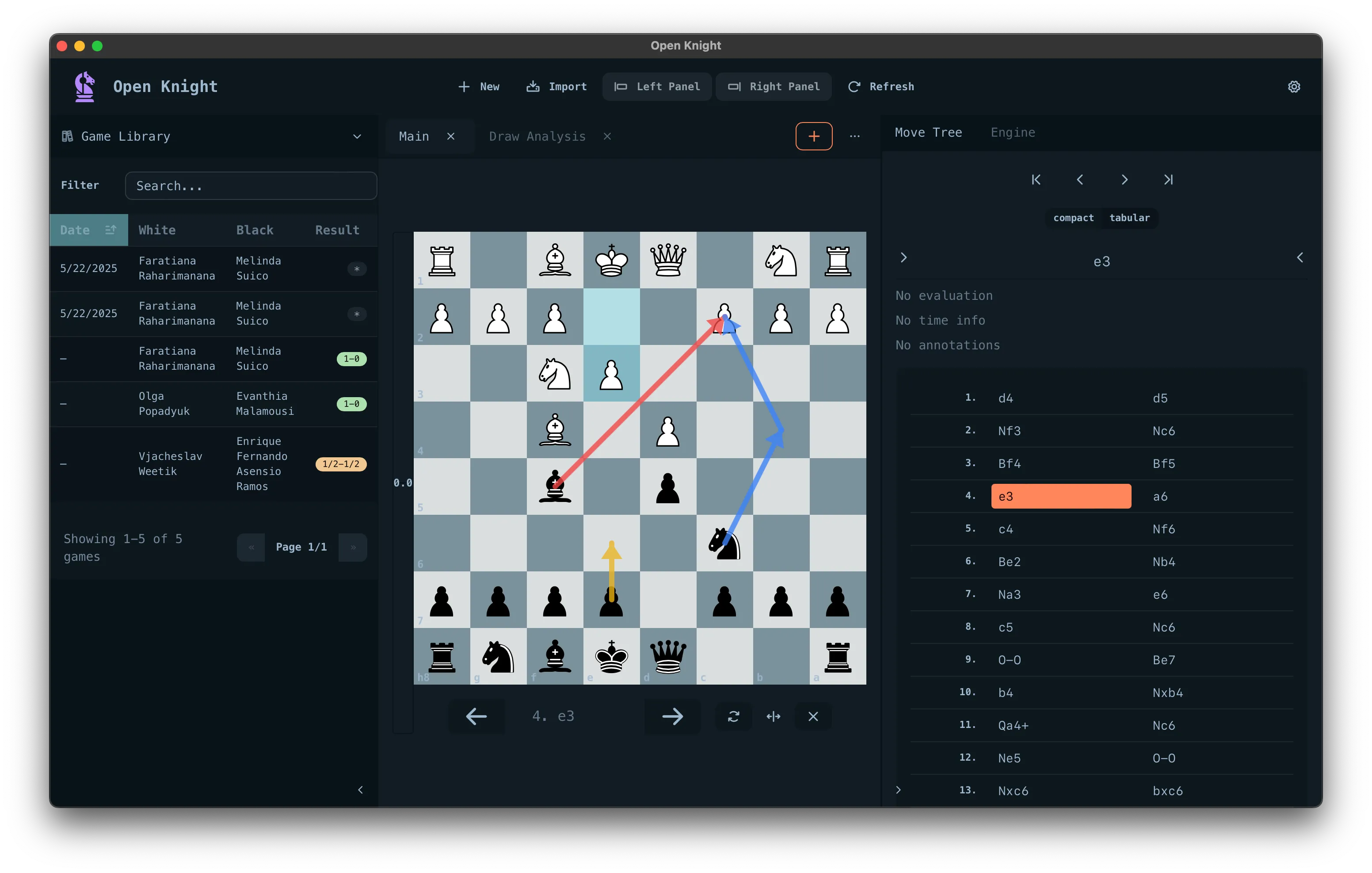
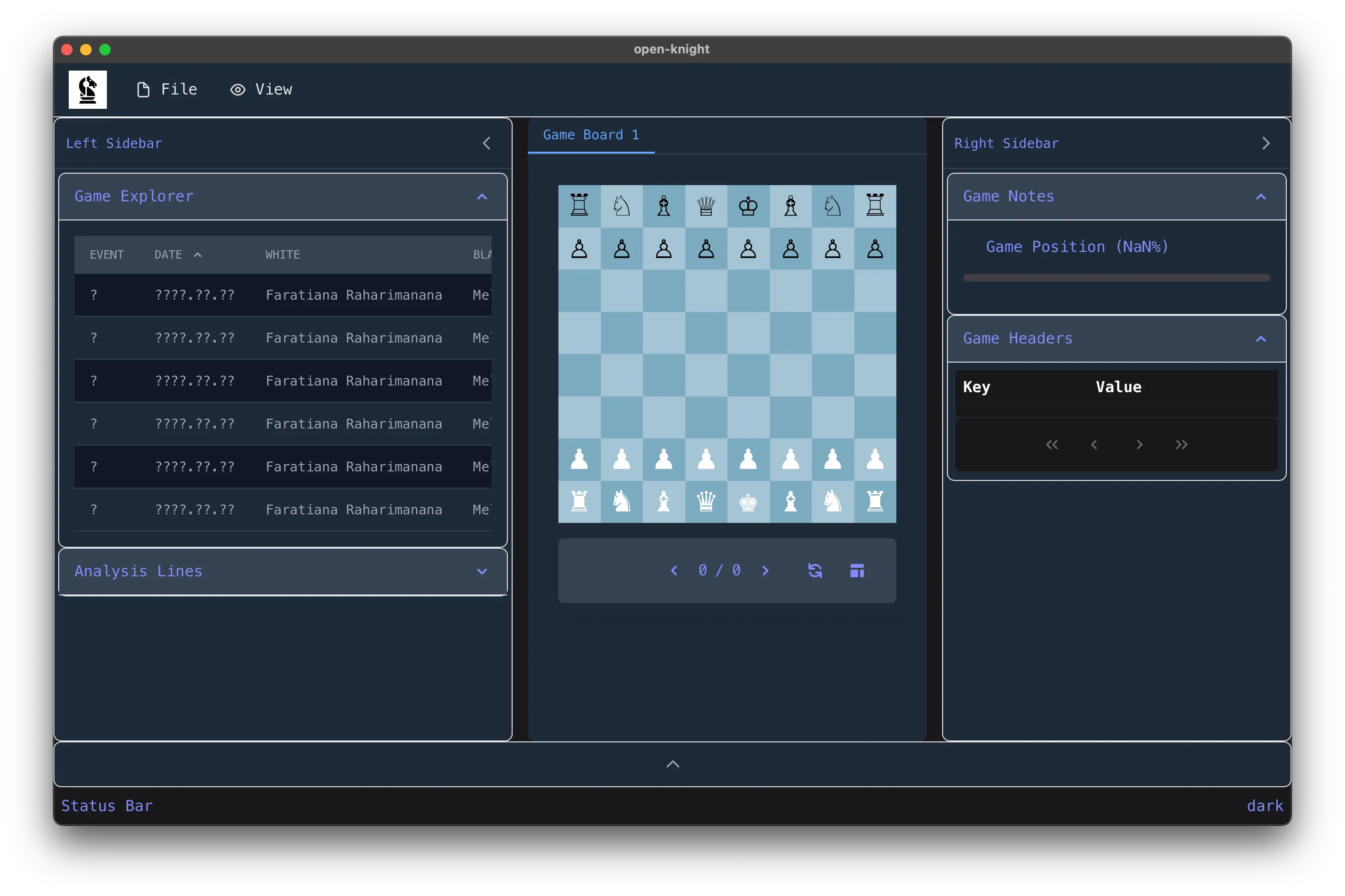
Old UI (November 29, 2024)
Technical Challenges
Type System Integration
Bridging JavaScript chess libraries with Rust backend components revealed interesting complexities in type system design. While libraries like chess.js excel at game logic, their types don’t translate directly to Rust’s stricter system. The solution involved creating parallel type definitions and robust conversion methods, highlighting broader questions about client-server architecture and type coupling.
Performance Considerations
Analysis of large game databases demands careful attention to performance. The current implementation distributes processing between frontend and backend, with ongoing work to optimize this balance. Database schema design plays a crucial role, particularly in supporting quick retrieval and analysis of game collections.
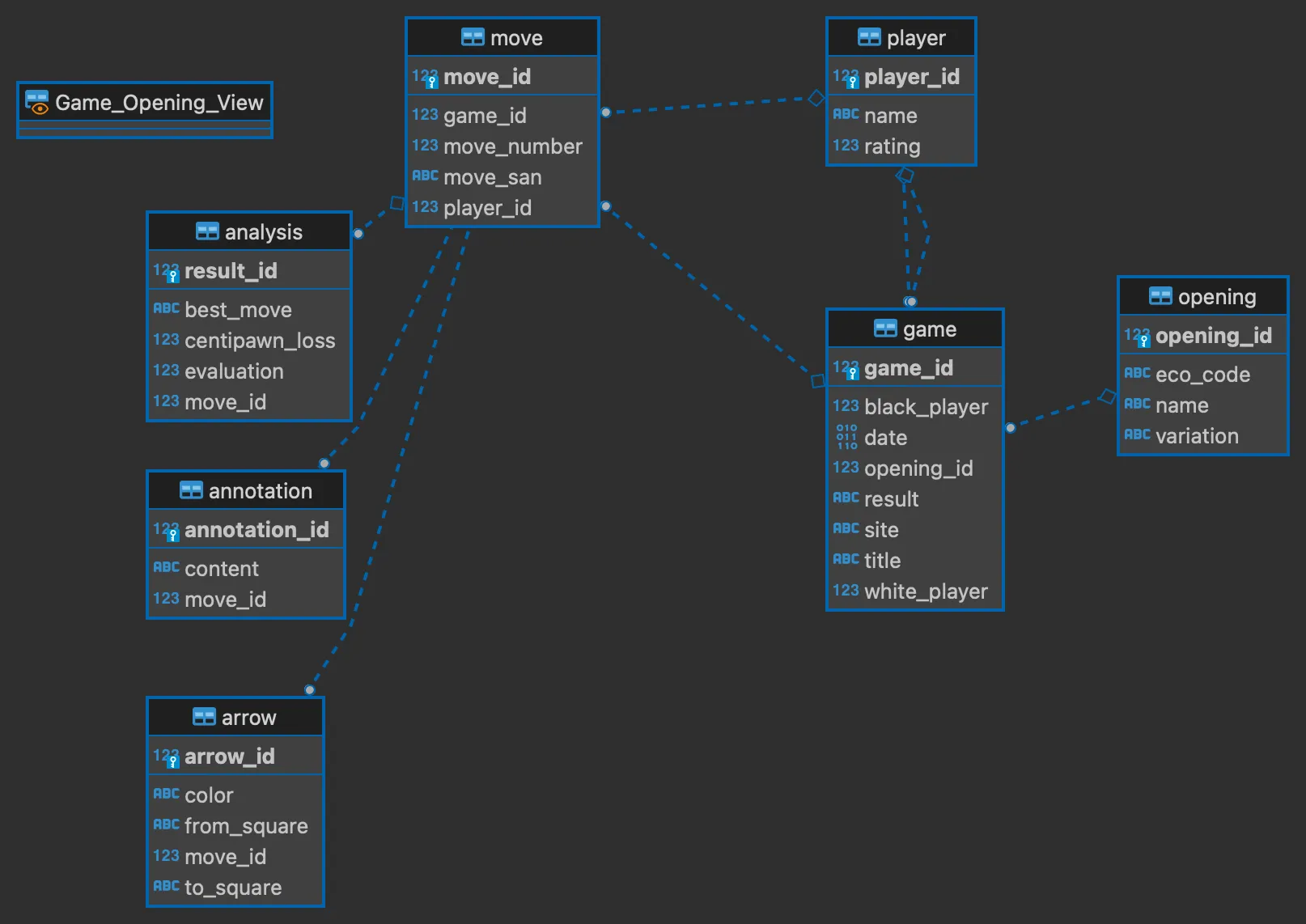
A UML diagram of the initial database schema prototype
Looking Forward
Several promising areas of development lie ahead:
- Enhanced backend processing for improved performance
- Expanded database capabilities for advanced analytics
- Community-driven feature development
- Mobile adaptation through Tauri v2
The transition to open source marks a significant milestone for Open Knight. The focus now shifts to building a sustainable ecosystem where community contributions can enhance the software while maintaining its core principles of accessibility and performance.
The project continues to evolve, with current work centered on a major refactor to improve backend logic and implement a customizable, VSCode-inspired interface system. These changes aim to further enhance both performance and user customization options while maintaining the software’s commitment to intuitive design.
Updates
2025-03-03:
- Switch to SeaQL ORM (from Diesel)
- Redesigned the database schema
- Refactored the UI to use DaisyUI Tailwind components
2025-06-02:
- UI overhaul
- Simplified the UI for both user experience and developer experience
- Support for multiple board tabs
- Annotation arrow drawing
- Update the move tree design and improved performance for very large/long games
- Support for all DaisyUI themes
- Added settings for light/dark mode defaults
- Basic chess engine support
- UCI protocol support
- Engine process spawning and IO management
- Event-driven async engine communication
- Position evaluation
- Dynamic engine settings form UI
- New backend session management system
- Allows for simplification of the UI logic/state management
- Improved performance by keeping “active”/open games in memory for manipulation
- Reduces the data needed to be passed between the frontend and backend
- More complex operations can now be fully handled on the backend improving performance
- Updated the API to be more consistent and organized for both the frontend and backend
- Lots of other small improvements and bug fixes
- Updated this project page with new UI screenshots!
- UI overhaul